
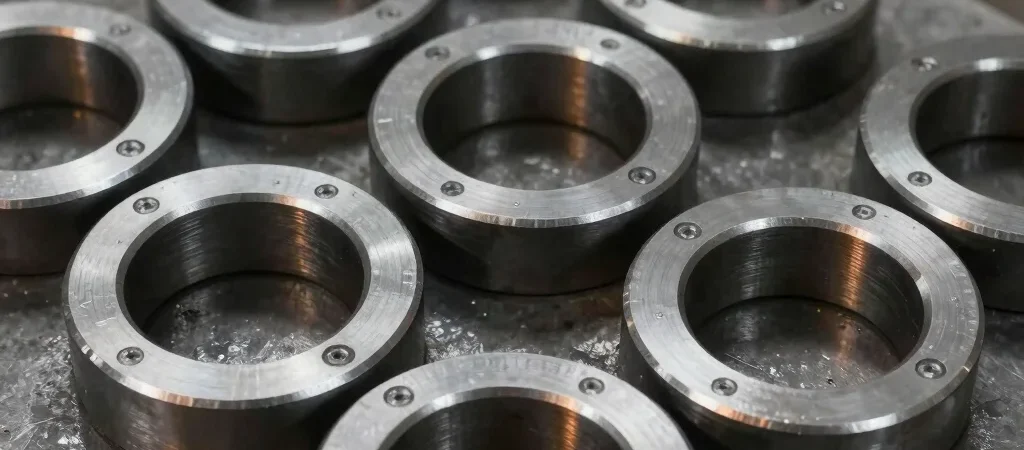
Abrasive agricultural residues like rice straw and cotton stalks impose severe tribological stress on press dies and compression screws. Over time, friction widens internal die tolerances, lowering the effective die compression ratio and reducing fuel block density. Plant managers must balance surface hardness, metallurgical coatings, and feed velocity to maintain continuous production economics.
Metallurgical Coatings and Alloy Selections for High Friction Dies
Standard carbon steel dies wear rapidly under the intense abrasion generated by high-silica residues. Upgrading to high-chromium tool steels or applying tungsten carbide laser cladding significantly extends component service intervals under continuous load. While alloy upgrades require higher upfront capital, the extension in working hours between rebuilds lowers total cost per ton produced.
Balancing Compression Taper Against Drive Motor Amp Draw
Die geometry must match both the springback character of the biomass and the rated amp load of the main drive motor. Steeper entry angles increase compaction pressure and calorific density but elevate thermal buildup and power consumption. Precise die taper calculation prevents unnecessary friction while producing dense, durable logs that withstand bulk transport without crumbling.
Preventative Maintenance Routines for Sustained Output
Implementing routine dimensional logging on die internal diameters allows engineering teams to predict wear curves accurately. Replacing or re-facing wearing components before tolerance limits are exceeded prevents motor overloading and maintains uniform product dimensions. Systematic maintenance ensures steady operating throughput per hour throughout the lifecycle of the briquetting plant.