
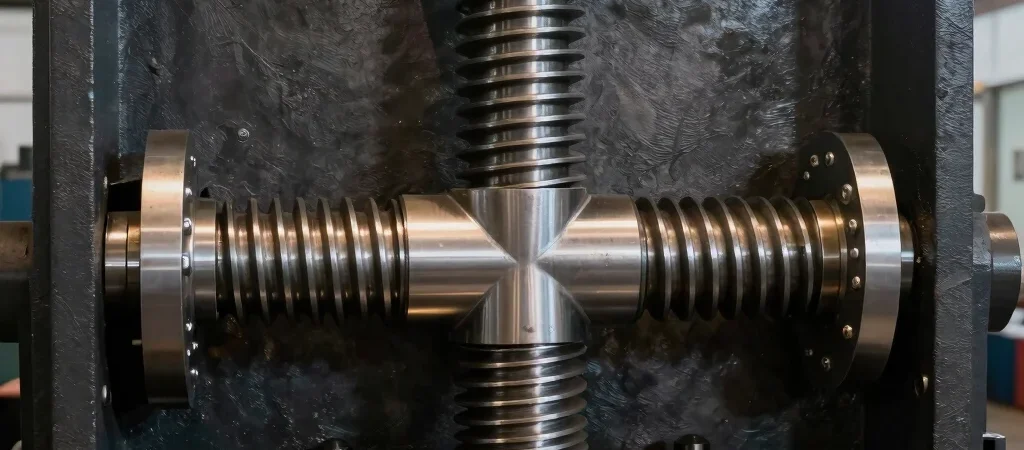
Selecting the appropriate compression technology dictates both the mechanical efficiency and maintenance budget of a biomass processing facility. Commercial operations primary choose between continuous extrusion screw presses and reciprocating piston systems. Each system handles shear stress, thermal friction, and material elasticity under fundamentally different mechanical principles.
Extrusion Friction and Thermal Compression in Screw Presses
Screw presses operate by forcing prepared agricultural residue through a tapered die using a heavy-duty continuous rotating screw shaft. External heating bands maintain die temperatures near three hundred degrees Celsius, softening natural lignin within the feedstock to act as an internal binder. This continuous method produces high calorific density logs with a central borehole that optimizes combustion airflow in industrial boilers.
Reciprocating Piston Dynamics and Hydraulic Shock Loading
Hydraulic and mechanical piston presses compress material through high-impact linear strokes without requiring external die heating elements. High system pressure creates structural density through mechanical interlock and natural friction, significantly reducing specific electrical power consumption per ton. However, the intermittent shock loading requires heavy foundational reinforcement and disciplined maintenance on main bearings, piston seals, and flywheels.
Selecting Press Technology Based on Production Goals
Facilities targeting premium commercial heating markets often favor screw presses due to the uniform density and combustion characteristics of hollow briquettes. Conversely, large-scale industrial co-firing operations prioritizing high throughput per hour and lower energy costs typically achieve better economic returns using heavy piston presses. Matching the machinery to your specific feedstock particle size and operational scale prevents costly retrofits post-commissioning.